
What does assisted living contribute to mental well-being?
Assisted living can support mental well-being by combining personal independence with daily help, social contact, safe routines, and access to supportive services. The goal is not simply to provide housing or assistance with bathing, dressing, meals, or medications. A well-organized setting can also reduce stress, encourage meaningful activity, and help residents remain connected to other people.
Mental well-being includes more than the absence of depression or anxiety. It can involve feeling secure, respected, useful, socially connected, and able to make choices about everyday life. For many older adults, these needs become harder to meet when household tasks, transportation, mobility, or memory changes make living alone more difficult.
In Jim Thorpe, changes in weather, hills, sidewalks, stairs, and older housing can affect how easily a person leaves home or manages routine errands. Assisted living may reduce some of those barriers while preserving opportunities for privacy and personal choice.
How can assisted living reduce loneliness?
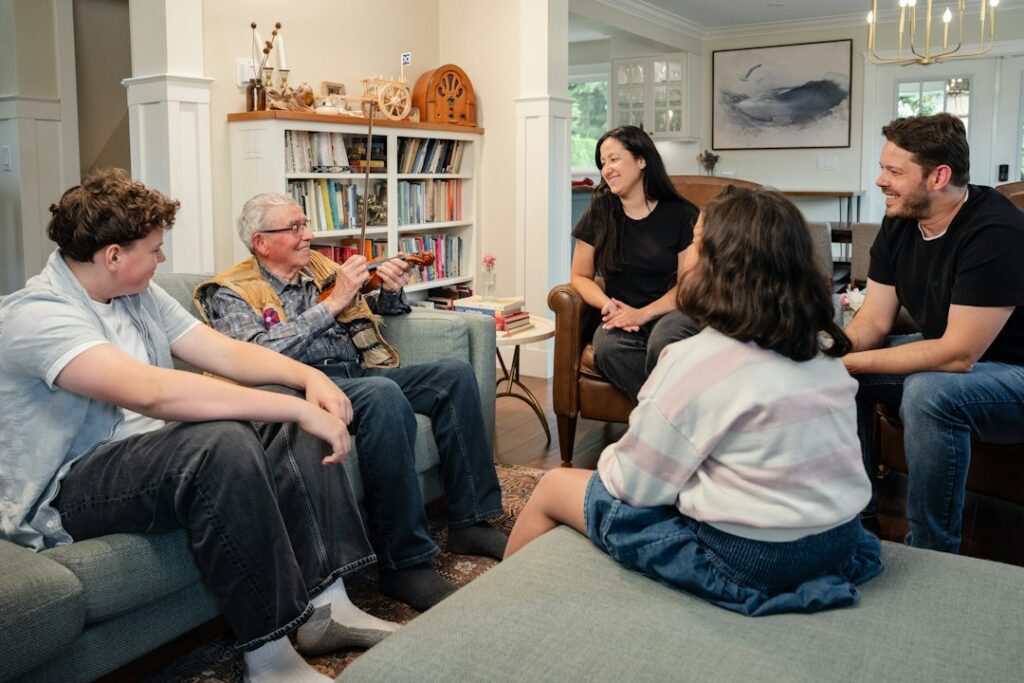
Regular social contact is one of the clearest ways assisted living can support emotional health. Residents typically share common areas, meals, activities, and informal conversations, creating repeated opportunities to see familiar people without having to arrange every interaction independently.
This matters because loneliness is not always the same as living alone. A person may feel lonely in a busy household, while another person may enjoy time alone but still benefit from dependable social contact. Assisted living can offer both options: private time in a personal living space and accessible interaction throughout the day.
Helpful forms of connection may include:
- Small-group conversations over meals
- Games, crafts, music, or discussion groups
- Shared celebrations and seasonal activities
- Visits with family members and friends
- Informal conversations with staff and neighbors
- Opportunities to welcome new residents or help with simple community tasks
Social participation should not be forced. Some residents prefer quiet activities or one-to-one conversations rather than large gatherings. Staff who learn a resident’s interests, history, and comfort level can make participation feel more natural.
Why do predictable routines help emotional health?
Predictable routines can make daily life feel more manageable. Knowing when meals are served, when activities occur, and where to find assistance may reduce the mental effort involved in planning each day.
Routines can be particularly useful for people experiencing memory changes, anxiety, low vision, hearing loss, or reduced mobility. A familiar schedule may help a resident feel oriented and less worried about what will happen next. It can also support better sleep, regular meals, medication consistency, and participation in activities.
A routine should not become rigid. Residents still need choices about when to wake up, what to eat when options are available, which activities to attend, and how to spend personal time. Emotional well-being is strengthened when structure supports independence rather than replacing it.
Can assisted living improve a resident’s sense of independence?
Yes. Assistance with daily tasks can sometimes increase independence rather than reduce it. When a resident receives help with a difficult or unsafe activity, that person may have more energy and confidence for activities that remain manageable.
For example, a resident might receive assistance with showering but continue choosing clothing, preparing a simple snack, organizing personal belongings, or deciding how to spend the afternoon. Another resident may need help managing medications but still participate in health discussions and make choices about appointments and activities.
Independence can also mean having control over personal preferences. Questions worth asking include:
- Can residents furnish and personalize their living space?
- Are there choices in meals and activities?
- Can residents decline an activity without being isolated?
- How are personal schedules and preferences recorded?
- Are changes in abilities discussed respectfully?
- Can family members remain involved at the resident’s direction?
Pennsylvania assisted living rules include protections related to resident dignity, personal belongings, freedom from abuse and neglect, and the right to live in a private unit unless residents voluntarily agree otherwise. These protections are connected to mental well-being because respect and control are central to a person’s sense of security.
How do activities support mood and cognitive health?
Meaningful activity gives structure to the day and can help residents maintain interests, skills, and relationships. Activities do not need to be elaborate. Reading, gardening in a suitable outdoor area, folding laundry, listening to familiar music, painting, baking, walking indoors, or discussing local history may all be valuable.
The most helpful activities generally match a person’s abilities and interests. A former teacher may enjoy helping with a reading group. Someone who worked with tools may prefer simple hands-on projects. A person who dislikes groups may respond better to a brief conversation, a puzzle, or time outdoors.
Physical movement can also support mood, sleep, balance, and confidence. In a community with seasonal cold, snow, and icy conditions, safe indoor walking routes and indoor activities can help residents stay active when outdoor travel is difficult. Outdoor access remains valuable during safer weather, provided pathways, seating, lighting, and supervision meet the resident’s needs.
Activities should be adapted rather than treated as tests of ability. The purpose is participation, pleasure, connection, and continued engagement—not performance.
What role does assistance with daily care play in mental well-being?
Difficulty with bathing, dressing, toileting, housekeeping, meals, or medications can create embarrassment, worry, and exhaustion. Reliable assistance may relieve those pressures and allow a resident to focus on relationships and personal interests.
Support can also reduce fear of falling or being unable to get help during an emergency. That added sense of safety may make a resident more willing to move around, attend activities, or maintain social contact.

The quality of that support matters. Assistance should be provided with privacy, clear communication, and enough time for the resident to participate as much as possible. Rushed or inconsistent care can increase distress even when the physical task is completed.
How should families recognize depression or anxiety?
Assisted living can support mental well-being, but it does not eliminate depression, anxiety, grief, or other health concerns. Families and staff should pay attention to changes that last or interfere with daily life.
Possible warning signs include:
- Loss of interest in previously enjoyable activities
- Ongoing sadness, irritability, fear, or withdrawal
- Changes in sleep or appetite
- Frequent statements of hopelessness or worthlessness
- Unusual confusion or a sudden change in behavior
- Repeated physical complaints without a clear explanation
- Neglect of personal care
- Comments about death, self-harm, or not wanting to live
These signs may reflect depression, anxiety, medication effects, pain, infection, sleep problems, grief, or another medical condition. A significant or sudden change should be shared with the resident’s healthcare provider. Any statement about self-harm requires immediate attention and emergency support.
What should families ask when evaluating mental well-being?
Families can learn a great deal by observing how residents are treated, not just by reviewing an activity calendar. Useful questions include:
- How are new residents introduced to others?
- What happens if a resident stops attending activities?
- How are cultural, religious, dietary, and personal preferences respected?
- How does staff respond to sadness, anxiety, or confusion?
- Are care plans updated when mood or behavior changes?
- How are family visits, phone calls, and private time supported?
- What transportation or community connections are available?
- How does the residence handle winter weather and indoor activity needs?
A supportive setting should make room for privacy, friendship, meaningful choice, and changing needs. Mental well-being is built through ordinary experiences repeated over time: being greeted by name, receiving help without embarrassment, having something to look forward to, and knowing that concerns will be heard.
